
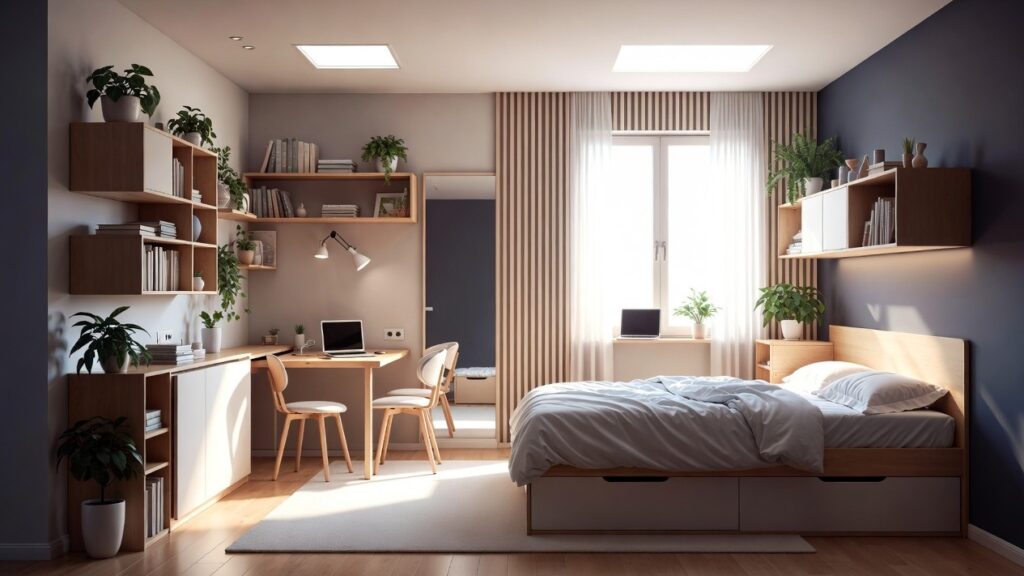
The city apartment—often a cozy studio or a compact one-bedroom—is a testament to the idea that living well doesn’t require a vast square footage. In the urban jungle, where space is a premium commodity, the ability to maximize every inch of your home becomes an essential skill. The goal is not just to survive in a small area, but to thrive, creating a space that feels open, organized, and deeply personal. It all begins with a shift in mindset: seeing your apartment not as a collection of rooms, but as a single, versatile volume.
The most powerful tool in the small-space dweller’s arsenal is the strategic use of light and color. A common misconception is that dark colors make a room feel cozy, but in a compact apartment, they can often make it feel like a cave. Embracing a light, neutral palette on the walls—soft whites, warm grays, or gentle beiges—helps to reflect natural light, making the space feel airy and expansive. To add depth and interest without cluttering the visual field, layer in textures through fabrics and accessories, such as a chunky knit throw, a linen curtain, or a jute rug.
When floor space is limited, we must look up. Vertical space is an often-underutilized goldmine in city apartments. Floor-to-ceiling shelving units not only provide immense storage but also draw the eye upward, emphasizing the room’s height. In the kitchen, magnetic strips for knives and spices free up precious counter space. In the living area, floating shelves can display books and art without the need for bulky furniture. This approach keeps the floor plan open and uncluttered, allowing for better flow and movement throughout the home.
Furniture selection becomes an art of curation rather than accumulation. In a small space, every piece must work for its keep. This is where multi-functional furniture shines. A stylish daybed can serve as a sofa by day and a guest bed by night. A large, trunk-style coffee table offers a surface for entertaining while hiding blankets or board games inside. A drop-leaf table in the dining nook can be expanded for dinner parties and folded down for daily use. By choosing pieces that serve double duty, you eliminate the need for single-purpose items that eat up valuable real estate.
Creating distinct zones in a studio apartment is crucial for mental clarity and organization. Without walls, you need to visually carve out the areas for sleeping, living, and working. This can be achieved with room dividers that aren’t solid walls—think a large bookshelf that is open on both sides, allowing light to pass through while defining the spaces. Area rugs are another excellent tool: a soft rug anchors the sleeping area, while a different texture defines the living room. Even the strategic placement of a tall plant can create a soft, natural boundary between zones.
Ultimately, maximizing a small space is an exercise in mindfulness. It forces you to live intentionally, keeping only what you truly need and love. The result is a home that feels calming and efficient, free from the burden of excess. By embracing smart design principles—light colors, vertical storage, multi-functional furniture, and subtle zoning—you can transform a cramped city apartment into a sanctuary that feels both spacious and uniquely your own.